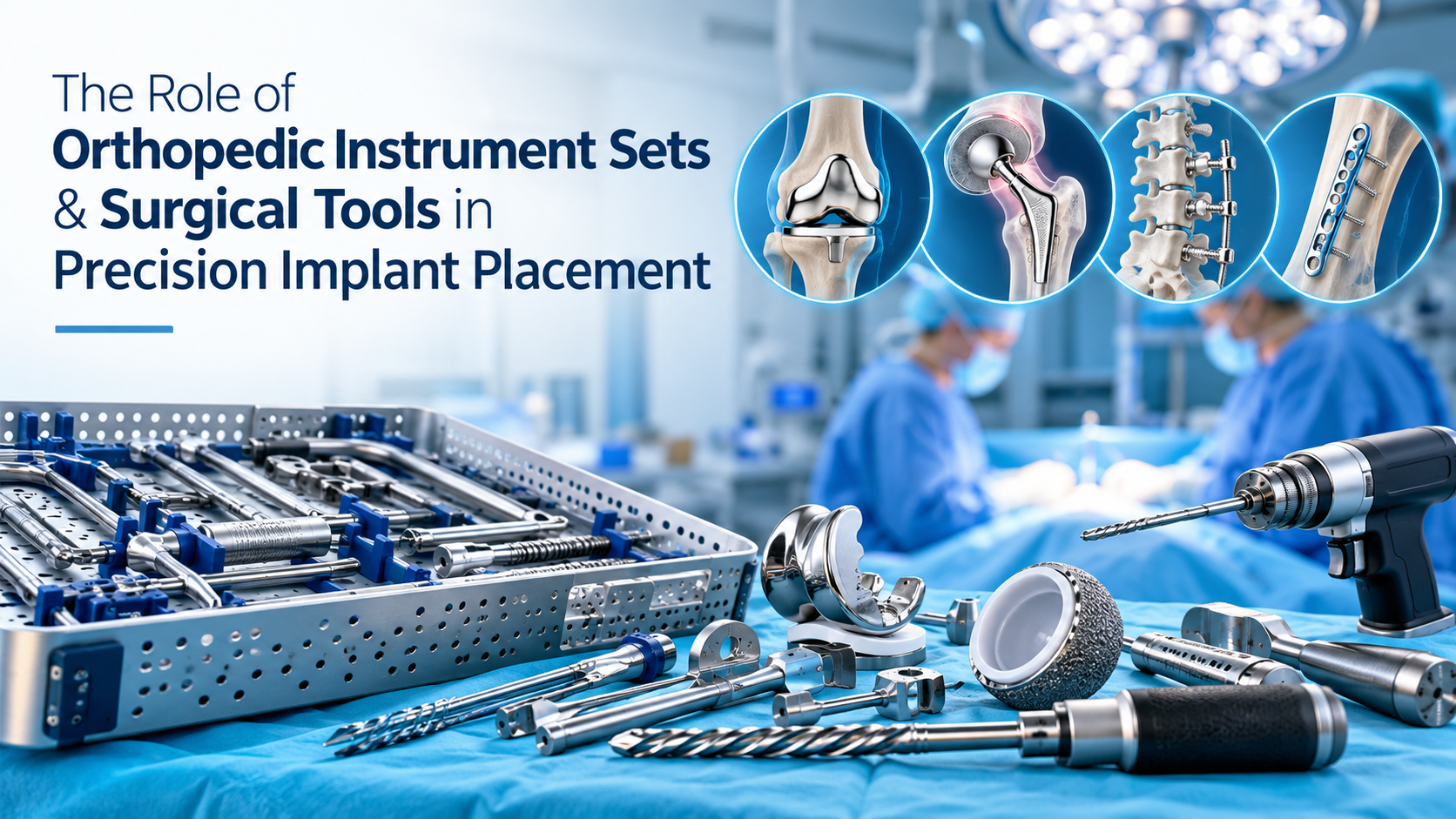
Precision is a fundamental requirement in modern orthopedic surgery. The successful placement of an orthopedic implant depends not only on the implant itself but also on the quality, design, compatibility, and performance of the surgical instruments used during the procedure.
From bone preparation and implant sizing to trialing, alignment, insertion, and final positioning, orthopedic surgical instruments provide surgeons with the tools needed to perform each step in a controlled and systematic manner.
A well-designed orthopedic instrument set can help support surgical workflow, improve procedural consistency, and facilitate accurate implant placement when used according to the manufacturer's instructions and the surgeon's clinical judgment.
Why Are Orthopedic Surgical Instruments Important?
Orthopedic procedures often require precise preparation of bone and careful positioning of implants. Even small variations in preparation or alignment can affect the surgical procedure. Orthopedic surgical instruments are specifically designed to support these procedural requirements.
Depending on the procedure and implant system, instrumentation may assist with:
-
Bone preparation
-
Cutting and shaping
-
Drilling and reaming
-
Measuring and sizing
-
Trial component placement
-
Implant positioning
-
Alignment and orientation
-
Impaction and insertion
-
Removal or revision procedures
The instruments therefore form an important connection between the surgical technique and the implant system.
The Role of Instrument Sets in Implant Placement
A complete instrument set brings together the specialized tools required for a particular implant system or surgical procedure. The exact configuration depends on the procedure, implant design and surgical technique.
For example, a knee replacement instrument set may include cutting
guides, alignment instruments, sizing tools, trial components, drills and implant insertion instruments.
Similarly, hip replacement instrumentation may include broaches, rasps, trial components, femoral
preparation instruments, acetabular reamers and implant impactors, depending on the system.
Having the appropriate instruments available can help the surgical team follow the intended procedural sequence efficiently.
Bone Preparation
Proper bone preparation is an essential step before implant placement. Depending on the procedure and implant system, cutting guides, drills, rasps, reamers and other preparation instruments may be used to prepare the bone according to the requirements of the selected implant system.
Implant Sizing
Selecting an appropriate implant size is an important part of orthopedic surgery. Sizing instruments and trial components allow the surgical team to assess the appropriate implant configuration before final implantation.
Alignment and Positioning
Alignment instruments and guides can assist the surgeon in maintaining the intended orientation and positioning during different stages of the procedure. This is particularly relevant in procedures such as total knee replacement, hip replacement, trauma fixation and spinal surgery, where implant positioning is an important part of the surgical technique.
Trialing
Trial components allow the surgeon to evaluate the selected implant configuration before final implantation. Trialing may help assess factors such as component size, position, alignment, stability and range of motion. The exact trialing process depends on the implant system and surgical technique.
Implant Insertion
Insertion instruments and impactors are designed to facilitate controlled placement of the implant. Using the appropriate instrument for the corresponding implant is important because instruments are generally developed around the dimensions, geometry and intended surgical technique of the specific implant system.
Key Types of Orthopedic Surgical Instruments
Modern orthopedic instrument sets contain many specialized
orthopedic surgical instruments & other power tools . Their exact configuration varies according to the procedure and implant system.
-
Cutting Guides — Cutting guides help establish the intended cutting position during procedures that require controlled bone resection.
-
Drills and Reamers — Drills and reamers are commonly used for creating or preparing bone surfaces for implant components.
-
Broaches and Rasps — Frequently used in hip procedures, broaches and rasps assist with preparation of the femoral canal and help establish the appropriate preparation for the selected implant.
-
Trial Components — Trial components allow assessment of implant size and configuration before final implantation.
-
Alignment Guides — Alignment guides can assist surgeons in maintaining the planned orientation during bone preparation and implant positioning.
-
Impactors and Inserters — These instruments are designed to facilitate the controlled insertion or seating of compatible implant components.
-
Measuring and Sizing Instruments — Measuring tools assist with determining appropriate implant dimensions and selecting compatible components during surgery.
Instrument–Implant Compatibility
One of the most important considerations in orthopedic instrumentation is compatibility between the instrument and implant system.
Surgical instruments should be designed, supplied and used according to the manufacturer's validated system and surgical technique. Compatibility is important because instruments may be developed around the dimensions, geometry and procedural requirements of the corresponding implant system.
Using an inappropriate or incompatible instrument can potentially result in:
-
Difficulty during implant insertion
-
Incorrect component positioning
-
Damage to the instrument or implant
-
Increased surgical complexity
-
Delays during the procedure
For this reason, hospitals and surgical teams should verify that the instrument set corresponds to the intended implant system and procedure before surgery.
How Does High-Quality Instrumentation Support Surgical Efficiency?
A well-organized orthopedic instrument set can contribute to an efficient surgical workflow. Several characteristics can support practical use during a procedure:
Organized Instrumentation — Clearly organized instruments allow the surgical team to identify and access the required tools efficiently.
Procedure-Specific Design — Procedure-specific sets can reduce the need to search for unrelated instruments and help maintain a logical sequence during surgery.
Ergonomic Design — Instrument handles, grips, mechanisms and overall geometry should be designed with practical surgical handling in mind.
Manufacturing Consistency — Accurate manufacturing and quality control are important because instruments must meet their specified dimensional and functional requirements.
Importance of Instrument Quality and Manufacturing
The reliability of orthopedic instrumentation depends on more than its physical appearance. Material selection, dimensional accuracy, mechanical performance, surface finish and quality-control processes can all influence whether an instrument performs according to its intended specifications.
For orthopedic manufacturers, important considerations include:
-
Dimensional accuracy
-
Material selection
-
Mechanical strength
-
Corrosion resistance
-
Surface finish
-
Functional testing
-
Inspection and quality control
-
Traceability
-
Packaging
-
Sterilization compatibility, where applicable
Consistent manufacturing helps ensure that instruments perform according to their intended specifications.
Sterilization, Cleaning and Maintenance of Orthopedic Instruments
The quality of an instrument is only one part of maintaining a reliable surgical system. Reusable orthopedic instruments require appropriate cleaning, inspection, sterilization, storage and maintenance according to the manufacturer's instructions and applicable hospital protocols.
Before use, the surgical team should verify that instruments are:
-
Clean and properly sterilized
-
Free from visible damage or excessive wear
-
Functionally intact
-
Complete according to the required set
-
Appropriate for the intended procedure
-
Compatible with the implant system
Damaged, excessively worn or malfunctioning instruments should be removed from use and managed according to applicable hospital procedures and manufacturer instructions.
Consequences of Incorrect Instrument Selection
Incorrect, incomplete or incompatible instrumentation can create unnecessary challenges during surgery. Potential problems may include:
-
Difficulty preparing the bone
-
Inaccurate sizing
-
Problems with implant insertion
-
Instrument damage
-
Implant damage
-
Increased operative time
-
Need for alternative instruments
-
Disruption of the planned surgical workflow
Therefore, instrument verification and set preparation before surgery are essential components of surgical readiness.
Modern Trends in Orthopedic Surgical Instrumentation
Orthopedic instrumentation continues to evolve alongside implant technology, digital planning and changes in surgical technique. Some developments include:
Patient-Specific Instrumentation — Patient-specific instruments can be designed based on individual patient anatomy and preoperative imaging in selected procedures.
Computer-Assisted Surgery — Computer-assisted systems can provide additional information regarding alignment and positioning during surgery.
Robotic-Assisted Procedures — Robotic-assisted orthopedic procedures may combine preoperative planning, intraoperative navigation and specialized instrumentation to support the surgeon's workflow.
3D-Printed Surgical Instruments — Advances in additive manufacturing have created opportunities for producing complex geometries and customized surgical tools.
Improved Instrument Ergonomics — Modern instrument design increasingly focuses on usability, handling, weight, grip and efficient surgical workflow.
How to Select the Right Orthopedic Instrument Set
Hospitals, surgeons and distributors should consider several factors when evaluating an orthopedic instrument set:
-
Implant Compatibility — Ensure that the instruments are specifically designed and validated for the corresponding implant system.
-
Procedure Requirements — The set should contain the instruments required for the intended surgical procedure and technique.
-
Instrument Quality — Evaluate manufacturing quality, materials, durability, finishing and functional performance.
-
Completeness — An incomplete set can create difficulties during surgery. Instrument inventory should therefore be checked before every procedure.
-
Ergonomics — Instruments should be practical for the surgical team to handle and appropriate for their intended use.
-
Cleaning and Sterilization — Reusable instruments should have appropriate instructions for cleaning, sterilization, inspection and maintenance.
-
Technical Support — Manufacturers and distributors should provide appropriate product information, surgical technique documentation and technical support.
Orthopedic Instrumentation and Implant Systems at SHARMA ORTHOPEDIC
At SHARMA ORTHOPEDIC, orthopedic implant systems and surgical instrumentation form part of a
broader product portfolio covering multiple orthopedic and related surgical applications.
Depending on the procedure and implant system, the portfolio includes orthopedic solutions
for knee replacement, hip replacement, trauma and fracture fixation, spinal surgery, arthroscopy,
external fixation and oral and maxillofacial surgery.
The company's Instrument Sets category includes procedure- and application-specific sets such as knee, hip, spine, nails, plates, cranio maxillofacial, arthroscopy, screw instrumentation and other configurations. The exact contents and configuration of an instrument set depend on the corresponding surgical application and implant system.
For more information about SHARMA ORTHOPEDIC's orthopedic implants and surgical instruments, explore the relevant product categories and instrument-set offerings.
Conclusion
Orthopedic implants and surgical instruments work together as an integrated system. While the implant provides the intended structural solution, appropriate instrumentation supports the surgeon during bone preparation, sizing, trialing, alignment and implant insertion.
The use of high-quality, compatible orthopedic instrument sets and surgical tools can help support procedural consistency, surgical efficiency and controlled implant placement when used according to the applicable surgical technique and manufacturer's instructions.
As orthopedic surgery continues to advance, instrumentation is also evolving through improved ergonomics, digital technologies, patient-specific solutions and advanced manufacturing techniques. Ultimately, the appropriate combination of implant technology, surgical technique, compatible instrumentation, quality manufacturing and trained clinical teams remains important to supporting orthopedic procedures.
Frequently Asked Questions (FAQs)
1. What are orthopedic surgical instruments?
Orthopedic surgical instruments are specialized tools used by surgeons during procedures involving bones, joints, implants and related musculoskeletal structures. They may be used for cutting, drilling, measuring, trialing, positioning and implant insertion.
2. Why are instrument sets important in orthopedic surgery?
Instrument sets provide the specialized tools required for a particular implant system or procedure, helping the surgical team follow the intended surgical workflow.
3. What instruments are used for knee replacement?
Depending on the implant system, knee replacement instruments may include cutting guides, alignment guides, sizing instruments, drills, trial components, preparation instruments and implant insertion tools.
4. What instruments are used for hip replacement?
Hip replacement instrumentation may include acetabular reamers, femoral broaches, rasps, trial components, measuring instruments and implant impactors, depending on the specific system and surgical technique.
5. Why is instrument–implant compatibility important?
Instruments are generally designed around the dimensions and geometry of their corresponding implant systems. Using compatible instrumentation helps support the intended surgical technique and reduces the risk of procedural difficulties
6. How should orthopedic surgical instruments be maintained?
Reusable instruments should be cleaned, inspected, sterilized, stored and maintained according to the manufacturer's instructions and applicable hospital protocols to maintain their safety, functionality and serviceability.